Paper Bowl 3D Mockup: Strategic Branding for Food Packaging Presentations
For businesses in the food industry, packaging is more than a container—it's a communication tool, a brand asset, and often the first physical interaction a customer has with a product. The Paper Bowl 3D Mockup offers a powerful solution for visualizing and presenting food packaging concepts in a realistic, engaging way. Whether you're designing for a new ramen shop, a meal prep service, or a fast-casual restaurant, this mockup helps translate ideas into compelling visuals that support branding, marketing, and customer engagement strategies.
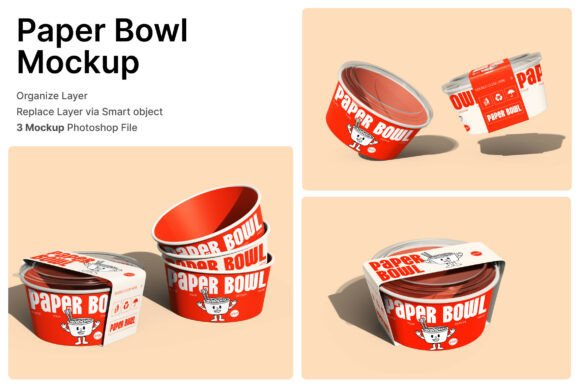
At its core, the Paper Bowl 3D Mockup is a set of high-resolution digital scenes that simulate real-world packaging presentations. It includes three PSD files, smart object layers for easy customization, and a help guide to streamline the design process. With high-resolution output at 4000 x 3000 pixels and 300 dpi, the mockup ensures that your designs look professional and ready for client presentations, digital marketing, or packaging production discussions.
Why Strategic Use of Paper Bowl 3D Mockup Matters
Designing packaging without a clear visual reference can lead to misaligned expectations, costly revisions, and missed branding opportunities. The Paper Bowl 3D Mockup allows creators to visualize their designs in context, which is crucial for making informed design decisions. It supports strategic thinking by enabling businesses to test different branding elements—such as color schemes, typography, and logo placement—before committing to physical samples.
For example, a meal prep business launching a new line of portion-controlled salads can use the mockup to test packaging variations that emphasize health, freshness, and sustainability. By seeing how the design looks on a realistic paper bowl with a sealed lid or sleeve packaging, the team can better align the visual identity with the brand’s messaging and customer expectations.
Supporting Branding and Customer Experience Through Realistic Visuals
In food delivery and takeaway services, packaging plays a critical role in shaping customer perception. A well-designed paper bowl can elevate the dining experience, reinforce brand recognition, and even influence word-of-mouth marketing. The Paper Bowl 3D Mockup helps businesses visualize these touchpoints before production, ensuring that the final packaging aligns with both aesthetic and functional goals.
Consider a fast-casual ramen shop looking to expand its delivery footprint. Using the mockup, the team can present packaging concepts that are both visually appealing and practical—showing how the bowl stacks, how the lid seals, and how the branding appears from different angles. This level of detail supports better decision-making around packaging materials, structural design, and brand consistency across multiple locations.
When and How to Use the Paper Bowl 3D Mockup Effectively
The Paper Bowl 3D Mockup is most effective when used during the design and pre-production phases of packaging development. It serves as a bridge between concept and execution, allowing teams to refine ideas, test variations, and communicate more clearly with stakeholders, manufacturers, or clients.
To get the most out of the mockup, it's important to approach it with a clear objective. Are you testing brand alignment? Optimizing for shelf appeal? Communicating packaging functionality to a client? Each of these goals will influence how you use the tool and what elements you focus on during customization.
- Define your goal – Determine what you want to achieve with the mockup before starting the design process.
- Gather reference materials – Collect brand guidelines, competitor packaging samples, and target audience insights to guide your design choices.
- Use smart layers strategically – The PSD files allow for easy customization, but it's best to maintain a logical layer structure to avoid confusion later.
- Test variations – Create multiple versions of your design to see how different elements affect perception and usability.
Key Considerations Before Relying on the Mockup
While the Paper Bowl 3D Mockup is a valuable tool, it should be used as part of a broader packaging strategy—not as a standalone solution. One common pitfall is treating the mockup as a final design output rather than a visualization aid. It's important to remember that the mockup does not include actual stock images or material specifications, so additional testing and consultation with packaging suppliers are necessary before production.
Another consideration is ensuring that the visual design translates well to real-world materials. A glossy finish on screen may look vibrant, but if the actual paper bowl has a matte finish, the color and texture may appear different. This is why it's essential to use the mockup as a starting point and follow up with physical samples or material testing when possible.
Avoiding Common Mistakes and Misaligned Expectations
One of the biggest risks of using a 3D mockup without clear goals is ending up with a polished visual that doesn't reflect the practical realities of packaging production. For instance, a designer might create an intricate sleeve design that looks stunning in the mockup but is too complex or costly to produce at scale.
To avoid this, it's important to involve key stakeholders—such as packaging engineers, brand strategists, and production managers—early in the process. This collaborative approach ensures that the mockup is used not just for aesthetics, but as a tool to explore feasibility, cost-effectiveness, and alignment with brand values.
How to Use the Paper Bowl 3D Mockup Intentionally
Using the Paper Bowl 3D Mockup intentionally means aligning its use with strategic business goals. Whether you're launching a new product, rebranding an existing line, or preparing for a pitch to investors, the mockup should serve a specific purpose in your workflow.
- Start with a clear brief – Define the project scope, target audience, and desired outcomes before opening the PSD files.
- Map out your presentation needs – Determine which angles and variations (stacked bowls, sealed lids, sleeve packaging) will best showcase your design.
- Customize with brand assets – Use existing brand colors, fonts, and logos to maintain consistency across all touchpoints.
- Review and iterate – Share the mockup with team members or clients for feedback and refine based on insights.
- Bridge to production – Use the final mockup visuals to guide discussions with packaging vendors and ensure design feasibility.
Long-Term Value Beyond the Mockup
While the Paper Bowl 3D Mockup is a short-term design tool, its strategic value extends into long-term brand development and customer engagement. A well-executed packaging design can influence repeat purchases, customer loyalty, and brand perception over time. By using the mockup to test and refine packaging concepts early, businesses can avoid costly mistakes and create packaging that resonates with their audience.
For example, a food delivery startup using the mockup to design a cohesive packaging suite can ensure that every customer touchpoint—from the delivery box to the individual paper bowl—reinforces the brand’s identity and values. This consistency builds trust and recognition, which are essential for long-term growth in competitive markets.
Conclusion: A Thoughtful Approach to Packaging Visualization
The Paper Bowl 3D Mockup is more than a design tool—it's a strategic asset for food businesses looking to present their packaging ideas with clarity and professionalism. By using it thoughtfully, teams can make better design decisions, communicate more effectively, and align packaging visuals with broader business goals. Whether you're a small business owner, a freelance designer, or a marketing professional, incorporating this mockup into your workflow can enhance your ability to create packaging that stands out and delivers results.